There’s a statistic that has really stopped me in my tracks recently.
New Zealand youth now rank near the bottom of the developed world for happiness. According to the 2026 World Happiness findings, New Zealand placed 126th out of 136 countries for youth wellbeing. That means while our country is often seen globally as safe, beautiful, and prosperous, so many of our young people are quietly struggling beneath the surface.
And honestly… I don’t think most people realise how serious this is.
At Youth Encounter, we see it every week.
We see young people battling anxiety, isolation, low self-worth, addiction, trauma, disconnection from school, fractured whānau relationships, and a growing loss of hope for the future. We see many trying to cope in a world that is more digitally connected than ever, yet relationally more disconnected than ever.
The New Zealand Health Survey shows that nearly one in four young people aged 15–24 experience high or very high psychological distress — the highest rate recorded in the past decade.
Other research also highlights that:
59% of youth in the Tauranga region report feeling lonely,
youth mental health challenges have nearly doubled in the last decade,
and our wellbeing is increasingly being undermined by “loss of community, isolation and loneliness.”
This isn’t just a mental health crisis. I believe it is becoming a social cohesion crisis.
Because when young people lose belonging, they often begin searching for identity and acceptance in unhealthy places. Sometimes that looks like addiction. Sometimes gangs. Sometimes unhealthy online spaces. Sometimes shutting down emotionally altogether.
Behind so many behavioural struggles is a deeper cry:
“Do I matter?”
“Do I belong?”
“Is there hope for my future?”
That is why Youth Encounter exists.
Not simply to run programmes.
Not just to keep young people busy.
But to help rebuild identity, purpose, hope, resilience, and real connection in a generation that desperately needs it.
Years ago, Joel and I started Youth Encounter out of our own experiences of rejection and not fully belonging as teenagers. We understood how deeply those adolescent years shape the trajectory of adulthood. We wanted to create spaces where young people could feel accepted, encounter their God-given potential, and discover there is more to their life than the labels or struggles surrounding them.
Today, that mission feels more important than ever.
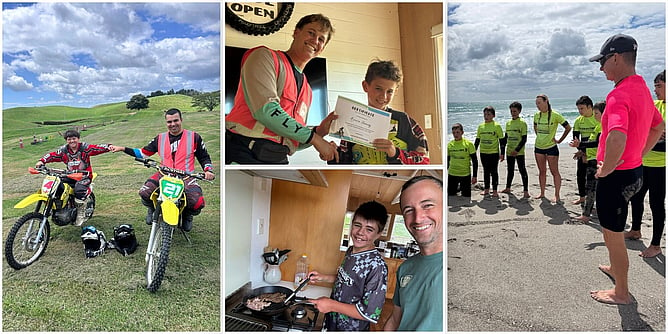
At Youth Encounter, we intentionally create environments of fun, acceptance, connection, and empowerment. We use activity-based therapy, mentoring, camps, leadership development, and relational support because we know transformation doesn’t happen through information alone — it happens through connection, challenge, trust, and belonging.
For many young people, Youth Encounter becomes what sociologists often call a “third space.” Not school. Not home. Not social media. But a safe place where they are seen, known, challenged, and valued.
And the outcomes show just how powerful that can be.
In 2025 alone:
326 individual young people engaged directly with Youth Encounter,
staff invested over 11,405 hours of intentional face-to-face support,
and 98% of participants experienced measurable growth across identity, purpose, hope, and resilience.
Over the past eight years:
89% reported increased self-worth and confidence,
87% strengthened whānau and cultural connection,
89% improved relationship skills,
and 90% developed a stronger sense of contribution to healthier communities.
That last point matters deeply.
Because healthy young people don’t just heal individually — they strengthen the communities around them.
Three years after engagement with Youth Encounter:
84% of our past participants were in work, education, or training,
67% were now in leadership roles,
61% were mentoring or supporting other young people,
and 48% were volunteering in their communities.
That is social cohesion being rebuilt in real time.
One past participant shared: “Huge boost of confidence in my teenage years and a sense of belonging helped me get through some of the toughest times I’ve had as an adult.”
Another said: “It has strengthened my confidence, relationships and shown me the power of connection.”
And another: “As a youth, encounter helped me to feel accepted, and grow my confidence in myself.”
Those words matter because they point to something bigger than programmes. They point to belonging.
I think one of the greatest challenges facing our generation is that many young people are growing up without enough deep, safe, relational connection. Social media gives the illusion of belonging, but often leaves young people feeling more isolated, anxious, and uncertain about who they are.
At Youth Encounter, we see what happens when young people are brought back into real community.
When they join in playing camp games.
Ride dirt bikes together.
Surf together.
Laugh together.
Open up honestly.
Get mentored consistently.
Are challenged to grow.
And begin to realise they carry incredible value and potential.
That changes people, and when enough young people change, communities begin to change too. This is why I believe investing into youth is not just charity work, it is nation-shaping work.
If we want a healthier New Zealand in the future, we must help young people build:
stronger identity,
healthier relationships,
resilience,
purpose,
faith,
contribution,
and belonging now.
Because the opposite of social breakdown is not simply policy.
It is connection.
It is community.
It is people willing to walk alongside young people long enough for transformation to occur.
The youth happiness crisis in New Zealand is real, but I still carry enormous hope.
Because every week at Youth Encounter, we watch young people move:
from insecurity to identity,
from despondency to purpose,
from despair to hope,
and from victimisation to resilience.
And I believe that kind of transformation has the power to strengthen not only individual lives — but the future social fabric of Aotearoa itself.